On our third day in Ljubljana, we joined a small group tour to two of Slovenia’s most famous sights: the Postojna Cave and the Predjama Castle. We booked the tour through the Klook app, and it turned out to be one of the most memorable experiences of our Europe trip this year.
We started our day with a light breakfast at our accommodation, Boutique Apartments, before strolling to the tour’s meeting point at Dalmatinova ulica 10. Our group was intimate as it was just me, D and another couple, plus our guide. we took a scenic route to the Postojna Castel as our guide shared his stories and insights about Slovenian life and landscapes.
Our first stop was the Postojna Cave, one of the most famous caves in the world. It was discovered in the 17th century and opened to the public in 1819. The Postojna cave system stretches more than 24 kilometers, though only a portion is open for tours. What makes it special is its underground railway, a hint that it is flocked by hundreds of tourists daily.
We arrived early, which gave me just enough time to indulge in a sweet treat: kremšnita. This was the delicious cream cake that I discovered when we went to Bled. I enjoyed it with a hot cup of coffee.
Soon after, our guide walked us to the cave entrance where he handed us off to an English-speaking guide. Even though there was already a queue, everything was well-organized and efficient. I wore my jacket as we entered the cave. Our guide said that the temperature in the cave is always within 8 to 10 degrees Celsius.
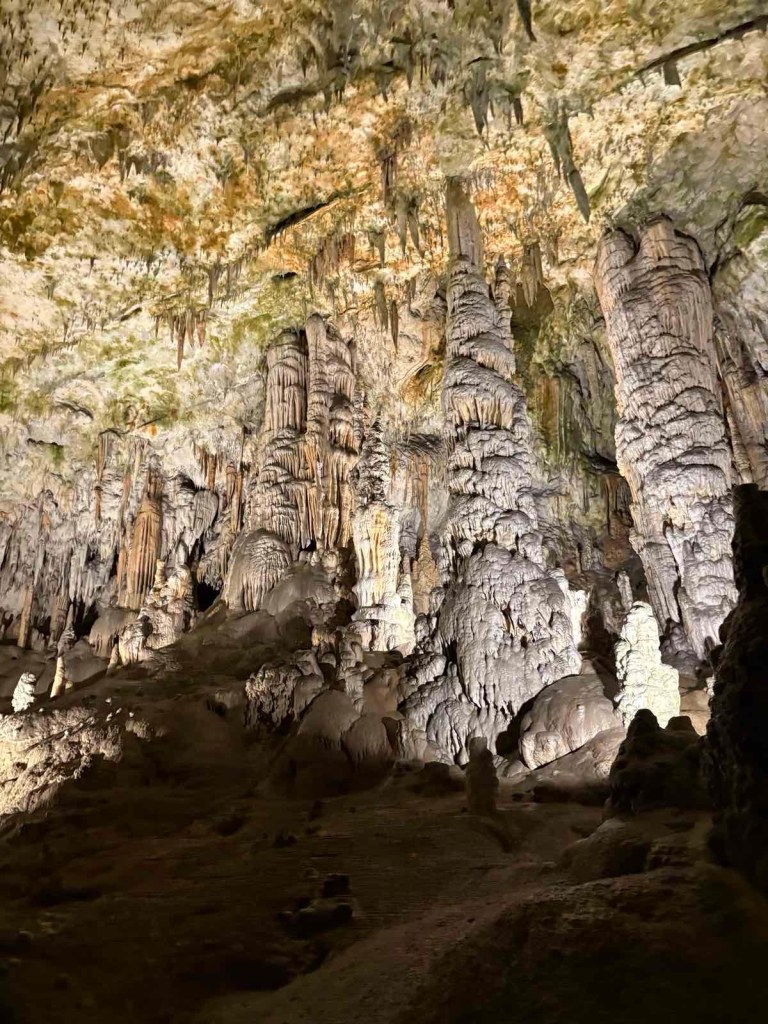
We boarded the electric cave train for the first part of the tour. It was a 2-kilometer ride through cave’s vast chambers and we gaped at the stalactites and stalagmites. D and I were absolutely amazed at the size and intricacy of the formations whizzing past us.
Then came the walking part of the tour which was about 1.5 kilometers through dimly lit paths that let us see the beauty of the cave up close. All tourists were reminded not to use flash photography, as light exposure can harm the delicate cave ecosystem and slow the growth of the formations. Our English guide said that the formations grow only about 1 centimeter every century.
One of the most fascinating parts of the cave tour was seeing the olm (also known as the “human fish”). It is a pale amphibian that lives in the rivers beneath the cave system and can survive years without eating. It is extremely sensitive to light as it has adapted to the pitch-black world of Postojna’s underground rivers.
Before we boarded the train back to the cave entrance, we dropped by the post office inside the cave. I could not resist mailing a postcard to my sister from there as I thought it was a unique way to say hello from Slovenia.
Afterwards we hopped back on the train for the final 500 meter ride out of the cave, still marveling at what we had just experienced.
After our amazing tour of Postojna Cave, our small group continued on to the next stop of the day: the striking and historical Predjama Castle. Located just a short drive from the cave, this castle looked like something straight out of a fairy tale. It was dramatically perched halfway up a cliff, built right into the mouth of a cave.
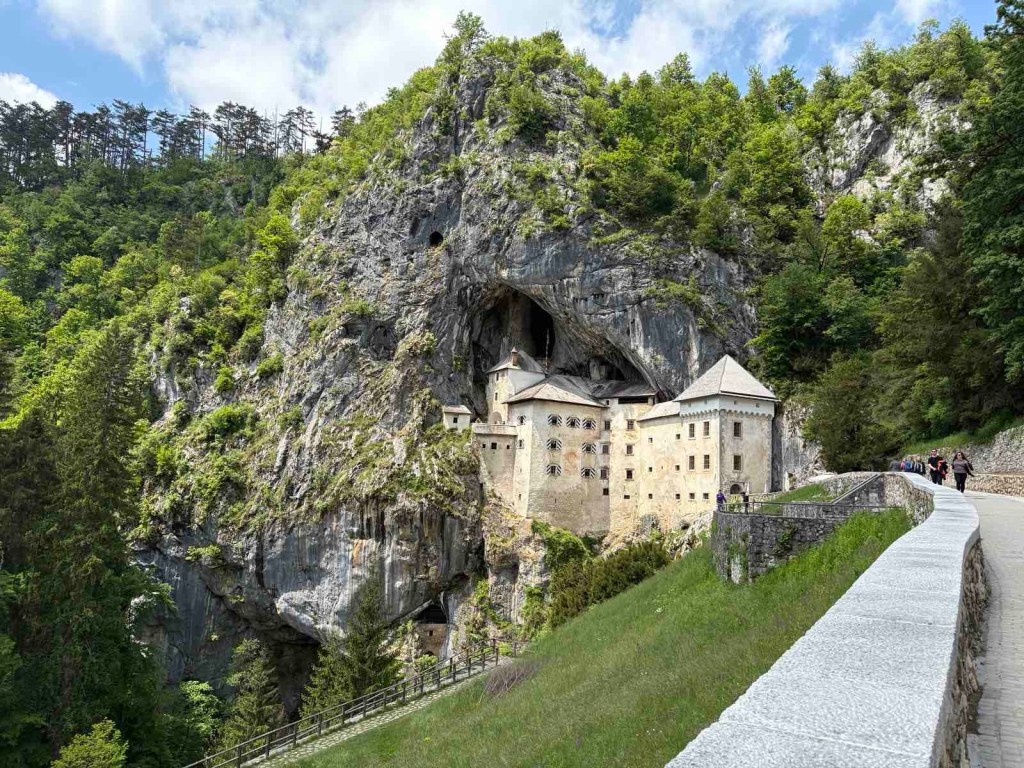
Predjama literally means “in front of the cave” (pred = in front of, jama = cave in Slovene). The castle’s stone walls blend into the rocky mountainside, making it look like it grew out of the cliff itself. But beyond its beautiful appearance, this Renaissance castle holds centuries of history and legends.
What makes it unique is how it was designed for defense. Its hidden position made it nearly impossible to conquer. Our guide explained there it has a secret tunnel that allowed supplies to reach the castle even during sieges.
The most famous resident of Predjama was Erazem Lueger, a 15th-century knight and nobleman often compared to Robin Hood. Legend has it that Erazem used the castle as a hideout while defying the Habsburgs and stealing from the rich to give to the poor. He held out for over a year, using the secret tunnel to sneak in food and continue his raids. Story goes that he was later on betrayed and killed by a cannonball while using the toilet.

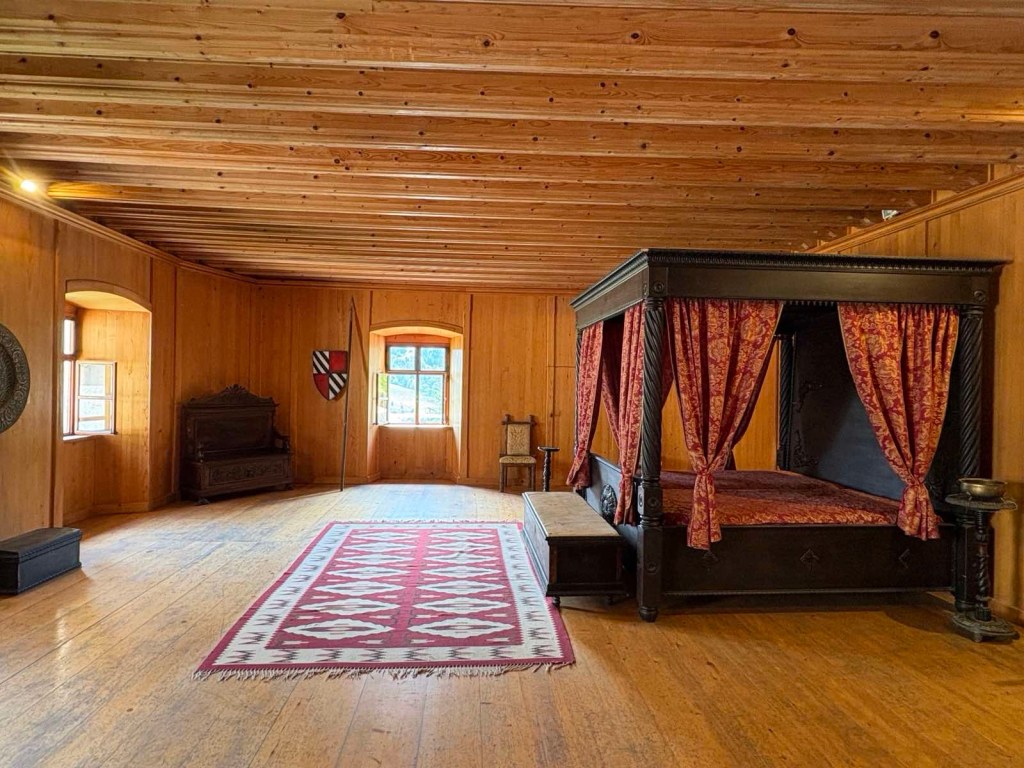
We explored the castle’s stone staircases and lookout points that offered a stunning view of the valley below. Despite the castle’s rough exterior it had touches of refinement. I particularly liked some of the chambers.

One of the most fascinating parts of the visit was stepping into the cave atop the castle, where the escape route once lay hidden. As I gazed out the cave’s “window” I watched birds fly in and out. I tried to take a video of it but my camera could not do the scene justice.
As we left Predjama Castle and began the drive back to Ljubljana, I took a moment to soak in the experience. Predjama Castle was the perfect companion piece to Postojna Cave. Postojna Cave revealed the hidden world beneath the surface, while Predjama Castle stood as a defiant stronghold carved into nature itself.


 Making Each Day Count
Leave a comment