
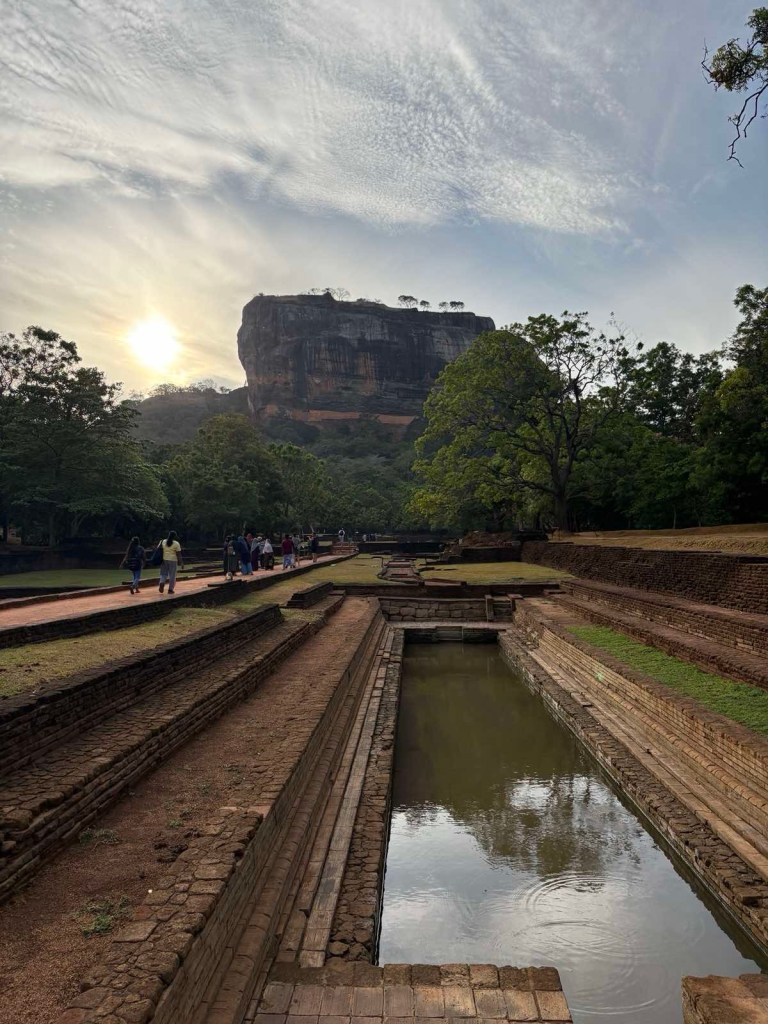
We woke at 4:00 AM after a restful night at EKHO Sigiriya, a stylish hotel that was just a stone’s throw away from the famous Sigiriya Rock . Our guide, Thilanka, picked us up promptly, and by 4:30 we were on the road to one of Sri Lanka’s most famous landmarks.
Sigiriya, often called the “Lion Rock,” is one of our top places to go to in Sri Lanka. Its story dates back to the 5th century, when Prince Kasyappa, the son of King Dhatusena and a non-royal mother, seized the throne. After killing his father, he built his fortress atop this massive rock. He used it as protection from his half-brother and the rightful heir, Prince Mogallana. What remains today showcases history, artistry, and architecture.
We began our trek through the Sigiriya Gardens, one of the oldest surviving landscaped gardens in Asia. Thilanka explained how its ancient plumbing system still functions today.
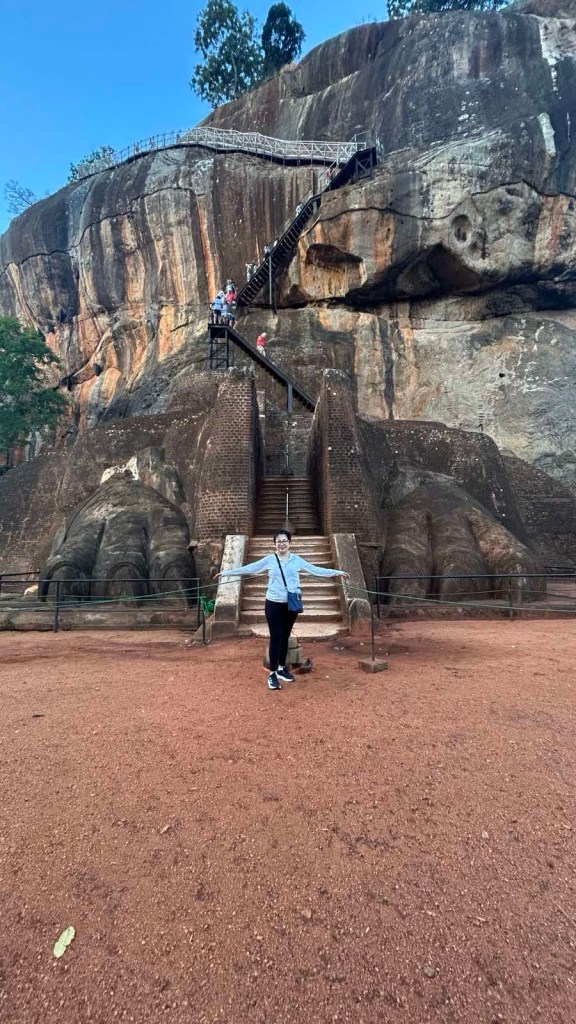
As we reached the Lion’s Staircase, we paused to catch our breath and gaze at the large lion’s paws carved into the rock. I dreaded the climb but it turned out to be manageable thanks to the cool dawn breeze, and the path being dark so I did not see how many more steps to go.
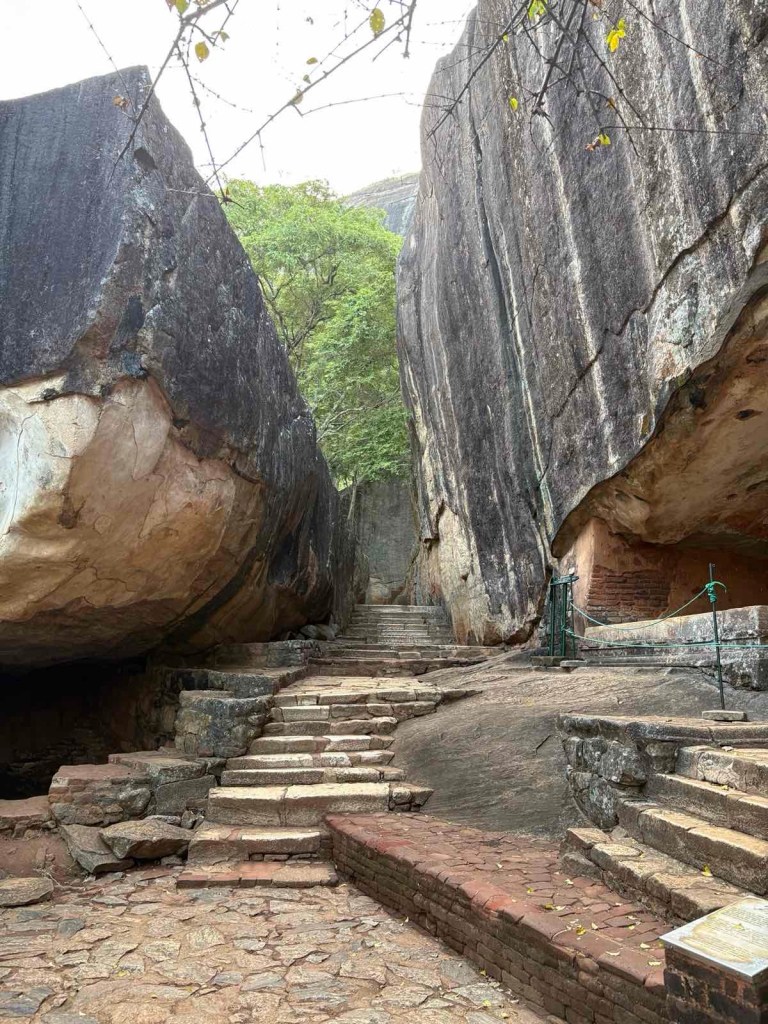
By the time we reached the summit, the horizon was beginning to light up. To my surprise, a small crowd had already gathered before us. Just as we settled in a quiet corner, a rowdy group of tourists claimed the edge, blocking much of the view. We did not let that dampen our mood though, and the space on top of the rock was vast so we found a new spot quickly.
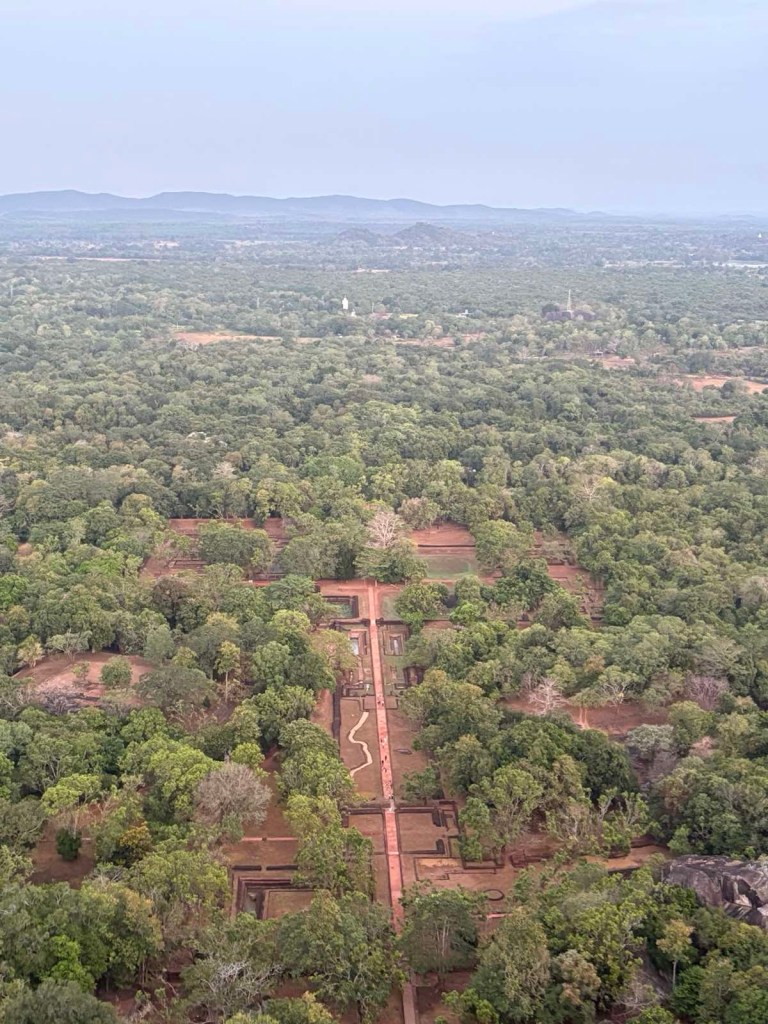
The sun had other plans and took its time so we explored the top of the rock. One viewpoint showed a great view of the Sigiriya Gardens, the forest surrounding us, and the nearby Pidurangala Rock. Pidurangala Rock is another rock formation and a famous hiking spot for those who wanted a less-crowded sunrise.


At last, the sun peeked through, splashing the sky orange and blue.


As the sun rose higher, we explored more of the ruins. Thilanka led us to the king’s stone throne, and to a pool used for water collection.
On our descent, we took a different path to view the Sigiriya Frescoes which were centuries’ old paintings of maidens preserved in an alcove. Nearby lay the Mirror Wall, where travelers from the olden days inscribed poetic verses. Further down, we passed prayer caves used by monks long before Kasyappa claimed the rock.

At the base, mischievous monkeys made a quiet appearance as they moved through the trees. My personal highlight came as we strolled back through the gardens, spotting different species of birds. I could spend another hour there just watching them fly and dip in the water.

Back at EKHO Sigiriya, we enjoyed our breakfast. Afterwards as we were packing up to head to our next destination, I heard thuds on the roof. When I went out to inspect what was going on, I found they were groups of monkeys crossing the hotel’s roof on to their next destination. The biodiversity in Sigiriya is truly amazing.


 Making Each Day Count
Leave a reply to Rebecca Cancel reply